This is for the founder, coach or creative who looks at their own website and feels a little embarrassed. If you're rebranding yourself for a new job, this one probably isn't for you (your LinkedIn will be fine).
You built that site honestly. It was true when you built it. It just describes someone you used to be, and you know it.
I've felt that too. I've rebranded Legacy Co twice, and both times the hard part came before the logo.
So here's where I want to start. Your brand is just younger than you are. The gap you feel means you grew.
What does it mean to rebrand yourself?
Rebranding yourself means updating how your work is named, described and presented so it matches who you are now. For a founder or creative, that usually means your message, your offers and your story come first. The logo comes last.
Most of us want to start with the logo, because it's the part we can see. That order usually means paying for it twice.
Signs you've outgrown your brand
In 2017, my wife Julie and I stepped back from leading worship around Charlotte. A few weeks before our last Sunday, I wrote in my journal that all the encouragement had been beautiful, but "somewhere along the way it became the point."
That kind of drift is subtle. I compared it to cutting lumber. Measure one inch off, and over several feet you're several inches off.
Brands drift the same way. Here's what it usually looks like from the inside:
- You wince when you send someone your link.
- How clients describe you doesn't match how your site describes you.
- Your offers changed and your message didn't.
- You serve a different person now than when you launched.
- You keep explaining, "What I actually do now is..."
There's a line from that same 2017 entry that still stings a little: "I've tied what I do, to who I am for far too long."
That's what an outgrown brand usually is. You tied who you are to what you did in one season, and then God kept forming you. The person grew. The logo, the bio and the offer list stayed put.
I wrote about a related problem in 5 signs your brand doesn't reflect your calling. That post is about drifting from your calling. This one is about growth, when you've become more than your brand says.
Do you need a rebrand, a refresh, or neither?
Before you change anything, figure out what's actually off. These 3 get mixed up all the time, and they cost very different amounts.
| What's off | What you need | Example |
|---|---|---|
| Who you are and who you serve changed | Rebrand: new message, maybe a new name | A worship leader who became a brand strategist |
| Same person, dated look or messy consistency | Refresh: update visuals and copy, keep the core | Same offers, tired website |
| The real problem is a weak offer or no demand | Neither yet. Fix the offer first. | No new logo can sell something people don't want. |
The last row matters most. A rebrand can't fix a business problem. If people aren't buying what you sell, a new name won't change that.
So fix the offer first. Then come back and see if the brand still feels off. If you check yes on that third row, start there, even if one of the others is true too.
Want this as something you can fill in? Grab the free "Rebrand, refresh or neither?" checklist below. It turns the table into yes-or-no questions and walks you through the 6 steps.
Free Download
Rebrand, Refresh or Neither?
The table as yes-or-no questions, plus the 6 steps.
How to rebrand yourself (step by step)
Identity comes first. Visuals come last. Here's the order I'd follow.
1. Name who you've become
Write down what's changed in the last few years. What do you believe now? Who do you serve? What are you good at now that you weren't when you launched?
Then sit with this question: What would change in your brand if you let it describe the person God has been forming these last few years, and not the one who launched it?
2. Keep what was faithful
List what still fits from the old brand. Most of it stays.
Think of a fruit tree. There's fruit on that tree, and there are dead branches that needed pruning. Your job is to tell them apart. Keep the fruit and cut the dead wood.
This step also protects you. The name people know, the clients who trust you, the pages people already find in search: if they still fit, keep them.
3. Rewrite your one sentence
Before you touch the website, get one clear sentence. Who you serve, what changes for them, and what makes it yours.
If you're stuck, these personal brand statement examples will help you get a first draft down.
4. Line up your offers
Look at everything you sell. Cut or rename what no longer fits the person you are now.
A clear new message sitting on top of an old offer list still sends mixed signals. People notice.
5. Then update the visuals
Logo, colors, photos. They come last, because they carry the message. They can't invent one.
If you pay someone to make it look good before you know what it should say, you'll probably end up paying for it twice.
6. Tell people the story
A rebrand lands better when you explain why. Your clients watched you grow, so let them in on it.
A short note that says "here's what changed in me, and here's what it means for you" goes a long way.
How I've rebranded Legacy Co (twice)
I'm writing this as someone who's been through it. I've done this with Legacy Co more than once.
2020: Curator. In 2020 a friend used the word "Curator" while we were talking about a rebrand, and I wrote that "I knew it was the right path to take." It fit who I'd become. The old version was just younger.
Here's how I describe that word: "A curator cares for the heart and the art of a person. You can't have one without the other."
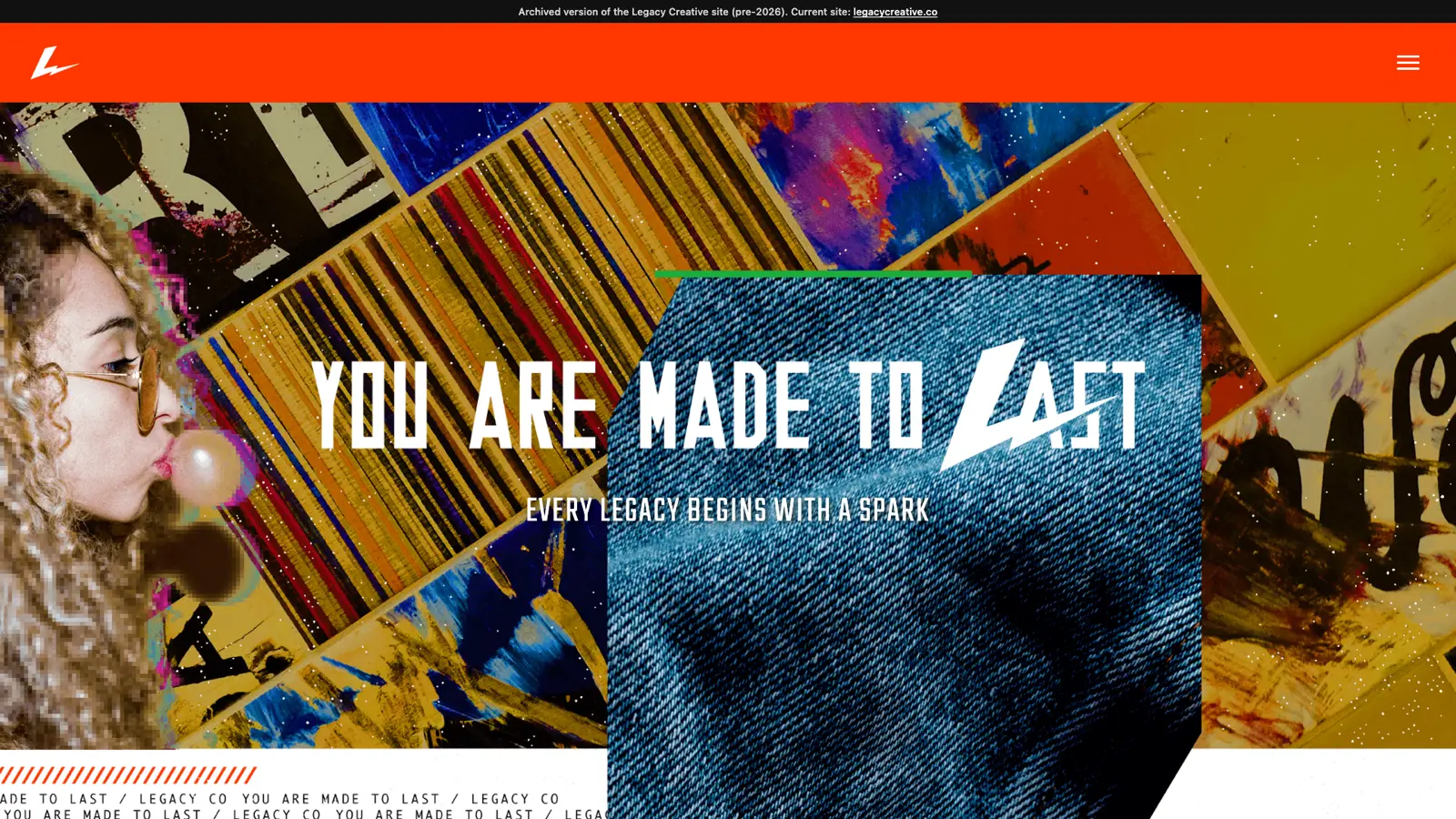
Here's what that looked like on the outside. My homepage in 2019 said "A place for makers + storytellers" and called us "practitioners of your marketing needs." Curating was one of three steps, and it meant gathering the best things about your brand and preparing them "for presentation to your target audience."
On New Year's Eve 2020 I announced a new name. Legacy Creative, Co became Legacy Co, and everything I did moved under one roof: coaching, community, courses and client work. I wrote that my "elevator pitch wasn't working," because the agency and the creative work had always lived apart.
The bigger change was what "curate" meant. I looked it up and found the first meaning: "a minister with pastoral responsibility, entrusted with the care of souls." So I wrote that we would put "people over products." The offers hadn't fully caught up yet (it was still hourly coaching and monthly marketing packages), but the belief underneath had moved.
2025: Brand Discipleship. In May of 2025 I was praying about Brand Discipleship and asked, honestly, "Is that even me?" What I heard back was, "That's the real you coming out."
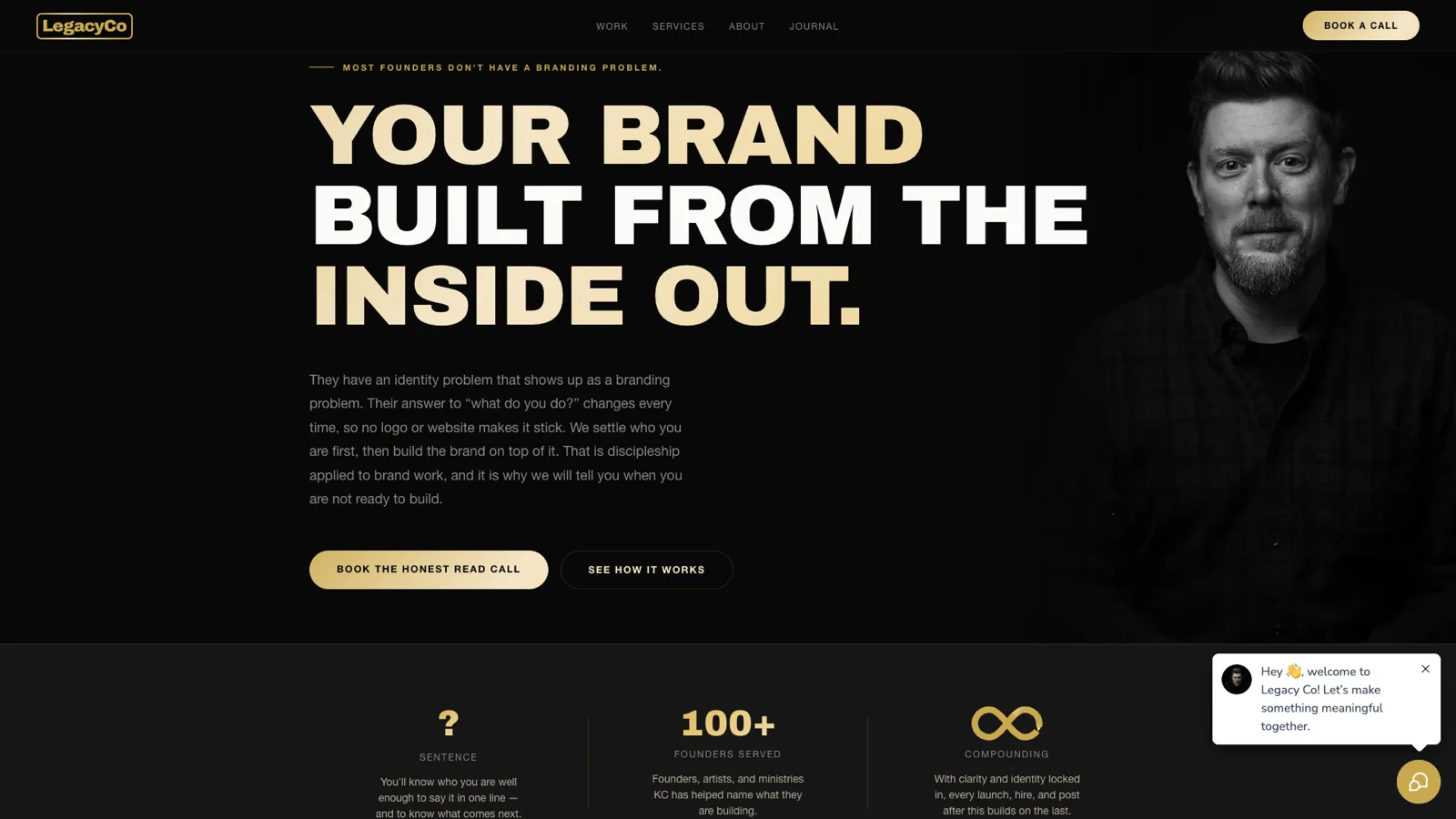
Here's the honest part. Two months after that prayer, my homepage still called Legacy Co "your go-to full-service brand development and management agency." The menu was Branding, Web Hosting + Design, Marketing and Coaching. I had changed. My site hadn't caught up yet.
When it did catch up, it flipped the order. The homepage now opens with "Your brand built from the inside out" and says most founders "have an identity problem that shows up as a branding problem."
The offers changed shape too. They used to be a menu. Now they're a ladder that starts free: a 20-question Imprint Assessment, then an Honest Read call where "not yet" is a real answer, then the Imprint Sprint, then a Brand Workday, and only then a full build. Identity work comes first, and the logo comes last. That's the same order I'm asking you to follow.
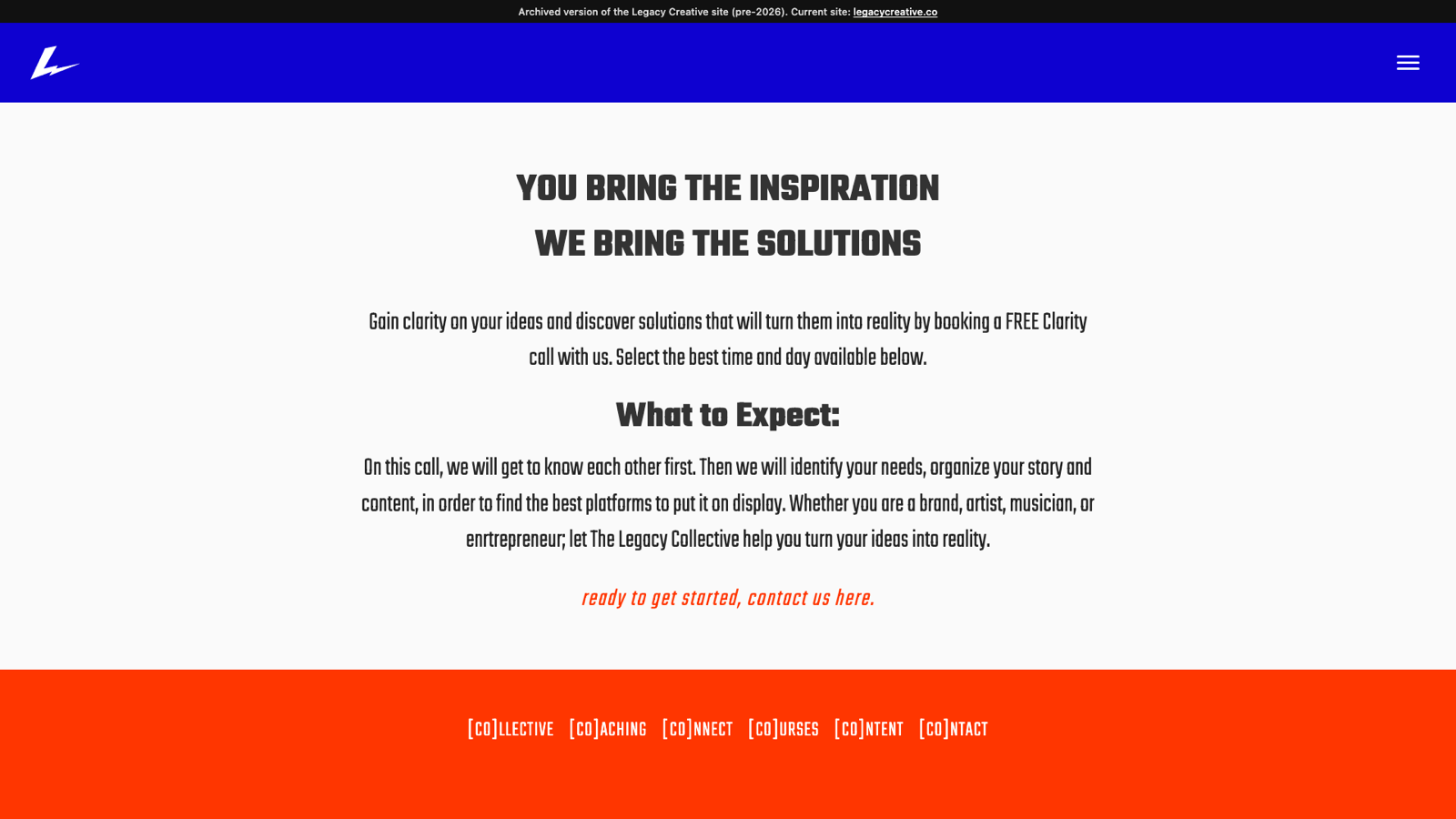
You can see it in the free first step. The old site offered a free "Clarity call" under the headline "You bring the inspiration, we bring the solutions." It promised to "identify your needs, organize your story and content" and "find the best platforms to put it on display." Today the free first step is the Honest Read, and the homepage says we'll tell you when you're not ready to build. Same free call. A different belief about what you need first.
Both times, the change started in me. The brand followed. That's the order I'd ask you to trust too.
Rebranding examples
Here are a few public examples where the brand caught up to who the company or artist had become.
- Dunkin'. Starting in January 2019, Dunkin' Donuts dropped "Donuts" from its name. Coffee and drinks had become the center of the business, and the name caught up to that.
- Apple. In 2007, Apple Computer, Inc. changed its name to Apple Inc. That was the same year the iPhone came out. The company made a lot more than computers by then, so the name changed to match.
- Taylor Swift. She started in country music. When she released 1989 in 2014, she announced it to fans as her first official pop album. She told the story out loud, so nobody had to guess what happened.
- Retune Your Heart. Don Blackwell came to us for an author website. After it launched, he told us he'd written a companion playbook in 6 days, and his work had become something bigger than one book. So the brand grew with him, from a book launch to a way for readers to practice what he teaches. In Don's words: "It took me 6 years to write the book… and it only took me 6 days to write the playbook. It took over a year to get the book to print — but Legacy Co brought the playbook to life and distributed it in less than two weeks."
Look at what each one kept. Dunkin' kept its orange and pink. Apple kept the apple. Swift kept her name and her storytelling. Don's book stayed at the center.
Each one kept what was faithful and changed what no longer fit. That's step 2 in action.
When the old version still has fruit on it
Every artist has a body of work they've outgrown. The early paintings. The first album. The style that got you noticed.
Keep it. It was faithful for its season. Just stop defending it.
Make the next piece like the person you are today, then let the old work be what it was.
For a long time, the Lord kept pointing me back to Genesis 12. God told Abram to leave his country, his people and his father's house, and go to the land He would show him. Abram didn't get a map. He got a promise and an open road.
A rebrand can feel a lot like that. When you start, you probably won't know what the new version looks like. You'll just know the old one doesn't fit anymore.
That's OK. Abram went anyway, and the promise held.
The gap you feel is a formation sign. You're becoming someone, and the brand is lagging behind the person. Let it catch up to who you are now, then build on that.
FAQ
How long does it take to rebrand yourself?
It depends on how much has changed. The identity work (steps 1 through 4) is the slow part, because it takes honest thinking and maybe a few honest conversations.
The visuals usually move faster once you know what they need to say. If you rush the first part, you'll probably redo the second.
Will I lose clients or search ranking if I change my name?
Honestly, you might, at least for a while. Changing your name can cost some recognition and some search ranking in the short term. People who knew the old name have to find the new one, and search engines take time to catch up.
That's why step 2 matters so much. If your name still fits, keep it and change the message. If it has to change, point your old web address to the new one and tell your people why.
Should I announce my rebrand?
Yes. Your clients watched you grow, so tell them what changed and why.
I think a short, honest note beats a big reveal. It gives people a reason to trust the new version, and it lets them come along with you.
Where to start
If you're not sure whether you need a rebrand, a refresh or neither, that's what the Honest Read is for. It's a free 30-minute call. Bring your brand as it is today, and you'll leave with my honest read on what comes next. Sometimes that's "not yet," and that's a real answer.
Not ready to talk yet? Take the free Imprint Assessment and see where your brand has fallen behind you.
Want to go deeper? Builder's Journal No. 3, What Are You Actually Called to Tend?, asks a hard question: "What have you been faithfully building that you were never actually called to steward?" It's step 2, one layer down.
Honor what you built without being held by it.